23210 V. Avenue, Dallas Center, Iowa 50063




Grub Control in Central Iowa Starts With Knowing What You’re Actually Dealing With
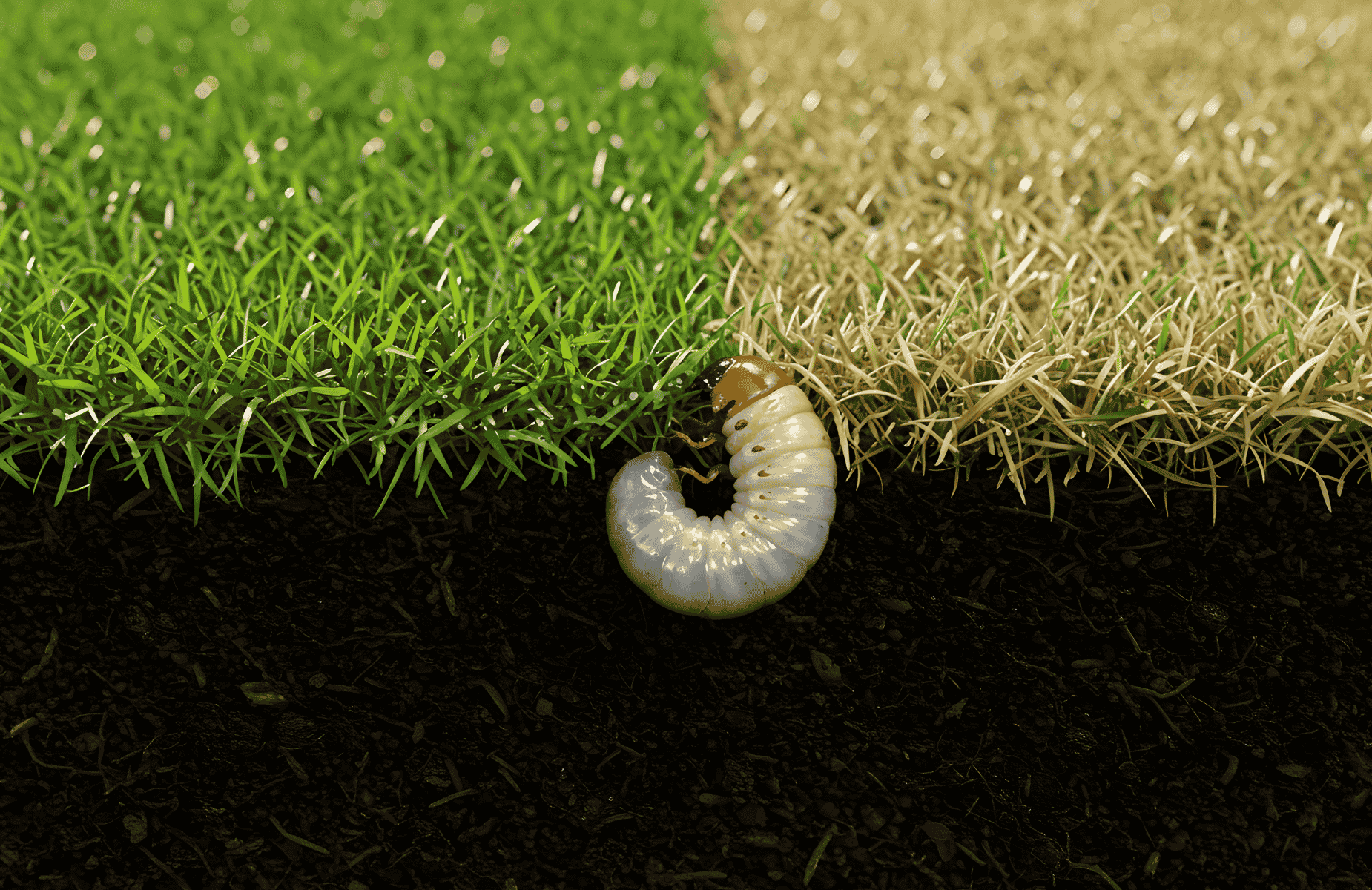
Every summer across Central Iowa, homeowners watch sections of their lawn turn brown and assume it’s the heat. They water more. Nothing changes. They try fertilizer. Still nothing. Eventually someone reaches down, grabs a handful of turf, and peels it back like a loose rug — and there they are. Dozens of white C-shaped larvae curled just beneath the soil surface, right where your grass roots used to be.
Grub control in Central Iowa is one of the most time-sensitive lawn care services we provide at Escape Landscaping, and it’s also one of the most misunderstood. By the time visible damage appears above ground, grubs have typically been feeding on roots for weeks. The window to stop them before serious damage occurs is right now — mid-June through July — and once that window closes, you shift from prevention to damage control.
We serve Des Moines, Ankeny, Waukee, Urbandale, Clive, West Des Moines, Dallas Center, Grimes, Adel, and all surrounding communities. This is what you need to know.
What Grubs Are and Why Iowa Lawns Are So Vulnerable
White grubs are the larvae of several beetle species common across Iowa — Japanese beetles, masked chafers, and May/June beetles are the three we see most consistently in Central Iowa lawns. Adult beetles emerge in early summer, feed on ornamental plants and trees above ground, then burrow into irrigated turf to lay their eggs just below the soil surface. Those eggs hatch in midsummer into larvae that immediately begin feeding on grass roots.
The destruction happens underground and invisibly. Grass roots are what anchor turf to the soil and pull up the water and nutrients the plant needs to survive. When grubs sever those roots, the grass above loses its lifeline. It dries out and dies from the ground up — which is why early-stage grub damage looks almost identical to drought stress. The difference is simple: drought-stressed grass recovers when you water it. Grub-damaged grass does not, because there are no roots left to absorb the water.
According to the University of Iowa Extension, a grub population of just 10 to 15 larvae per square foot is enough to cause visible turf damage. Heavy infestations can kill large sections of lawn within weeks.
How to Tell if Grubs Are Behind the Damage in Your Yard
Grub control in Central Iowa lawns starts with confirming grubs are actually the problem before any product goes down. Here is how to check without any special equipment.
Cut three sides of a one-foot square section of turf in a damaged area with a sharp spade and fold it back. Dig two to three inches into the soil beneath and count the larvae. Ten or more per square foot warrants treatment. Fewer than five in an otherwise healthy lawn may not require intervention.
A few other signs point clearly toward a grub problem. Turf that peels back with almost no resistance — lifting in sections rather than tearing — is almost always a sign of root damage from grubs. Sudden increased activity from birds, skunks, raccoons, or moles in specific areas of your lawn is another strong indicator. These animals have a remarkable ability to locate grub populations underground, and if something is tearing up your yard overnight it is almost certainly following a food source you haven’t spotted yet.
Timing Your Grub Control in Central Iowa — This Is the Part That Actually Matters
Most homeowners who have tried to treat grubs themselves and failed made the same mistake: they applied the product at the wrong time. Grub control products fall into two distinct categories and they work at completely different points in the lifecycle.
Preventive Grub Treatment
Preventive grub control in Central Iowa should be applied between late June and mid-July, before eggs hatch and while newly emerged larvae are still small and feeding close to the soil surface. At this stage grubs are at their most vulnerable. Preventive products applied correctly in this window typically achieve 85 to 95 percent control — a dramatically better outcome than anything applied later. These products need moisture to move down into the soil where the grubs are, so watering after application or timing treatment before rainfall is part of doing it right.
Curative Grub Treatment
Curative products are applied later in summer when grubs are already established and visible turf damage is occurring. They act faster than preventive products but are significantly less reliable because larger, more mature grubs are harder to kill and have often already caused the root damage you are trying to prevent. Curative treatment stops further loss but cannot restore turf that has already been killed.
The math is straightforward. Preventive grub control in Central Iowa applied right now is always the better option when timing allows for it.
Lawn Restoration After Grub Damage
Getting grubs under control stops the infestation. It does not fix the lawn. For yards that have experienced meaningful grub damage, restoration is the next step — and doing it right matters just as much as the treatment itself.
Depending on the extent of the damage, restoration typically involves removing dead thatch and debris, aerating disturbed soil, and overseeding with a grass variety suited to the conditions of the damaged area. Early fall — late August through September — is the best window for overseeding in Central Iowa. Cooler temperatures and more consistent rainfall create ideal germination conditions, and new grass has time to establish before winter sets in. Escape Landscaping handles both the grub treatment and the restoration process, so you are working with one team from diagnosis through full recovery. You can learn more about our overseeding and aeration services on our lawn treatments page.
Why the Same Lawns Keep Getting Hit Every Year
A question we hear constantly from homeowners across Des Moines and surrounding communities is why their lawn seems to get grubs every single year when a neighbor two doors down never has the problem.
The answer almost always comes down to what makes a lawn attractive to egg-laying beetles in the first place. Adult beetles prefer moist, well-maintained turf for laying eggs because it gives larvae the moisture and soil conditions they need to survive. Actively irrigated, regularly fertilized lawns — which describes most well-cared-for residential properties in Ankeny, Waukee, and across the Des Moines metro — are more appealing to beetles than stressed, dry turf nearby.
In other words, the better you maintain your lawn the more attractive it can be to the beetles that cause grub damage in the first place. This is why a preventive grub control application each year makes more sense than waiting to see damage and reacting. If your lawn has had grub problems before, the conditions that invited them haven’t changed.
Grub Control as Part of a Complete Lawn Care Program
The most effective approach to grub control in Central Iowa treats it as one part of a broader seasonal lawn health program rather than an isolated single treatment. Lawns that receive consistent fertilization, proper weed control, fall aeration and overseeding, and annual preventive grub management are significantly more resilient than those managed reactively — because the turf is denser, the root systems are deeper, and there is less opportunity for grubs to cause the kind of widespread root damage that thin or stressed turf is vulnerable to.
Escape Landscaping offers complete lawn treatment programs across the Des Moines metro and surrounding Central Iowa communities that include grub prevention timed to the Iowa beetle lifecycle, broadleaf weed control, fertilization, and fall aeration and overseeding. Clients on a full program have a team actively monitoring their lawn through the season rather than calling us after the damage has already spread. View our complete lawn care services on the Escape Landscaping website to see everything we offer.
Frequently Asked Questions About Grub Control in Central Iowa
How many grubs does it take to damage a Central Iowa lawn?
The standard treatment threshold is 10 or more grubs per square foot in a sampled area. Below five per square foot in a healthy lawn is generally not a cause for immediate concern. Escape Landscaping can assess grub populations during a lawn visit and give you an honest recommendation based on what we actually find.
What’s the difference between preventive and curative grub treatments?
Preventive products are applied before eggs hatch in late June through July and are highly effective against newly hatched larvae near the soil surface. Curative products are applied after grubs are already established and work faster but are less consistent in their results. Whenever the timing allows for it, preventive grub control in Central Iowa is always the stronger choice.
Can I handle grub control myself with products from a garden center?
Consumer products are available but are generally lower concentration than professional-grade materials and require precise timing and application rates to perform well. The most common failure with DIY grub control is applying outside the effective window — either too early or too late in the lifecycle — which dramatically reduces results. Professional applications from Escape Landscaping use the right product at the right time for Iowa conditions.
Are grub control treatments safe for kids and pets?
Yes, when applied by a licensed professional following label requirements. Escape Landscaping communicates clearly about re-entry intervals after every treatment so your family and pets are never at risk.
Do grubs only damage grass, or do they affect other plants too?
The grubs themselves feed exclusively on grass roots below the surface. The adult beetles that lay the eggs, however, feed aggressively on a wide range of ornamental trees, shrubs, and plants above ground during their active summer period. Japanese beetle damage is particularly visible on roses, linden trees, and many common landscape plantings across Central Iowa. Escape Landscaping can advise on managing both the larval and adult stages as part of a complete lawn and landscape program.
Don’t Wait Until August to Deal With This
The preventive grub control window in Central Iowa is open right now. Waiting until you see brown patches spreading across your lawn in August means the damage is already done and turf restoration becomes part of the conversation. Call Escape Landscaping at (515) 250-9886 or request your free quote online and let us get a treatment down before the grub population reaches the point where your lawn pays the price. We serve Des Moines, Ankeny, Waukee, Urbandale, Clive, West Des Moines, Dallas Center, Grimes, Adel, and all of Central Iowa.