23210 V. Avenue, Dallas Center, Iowa 50063




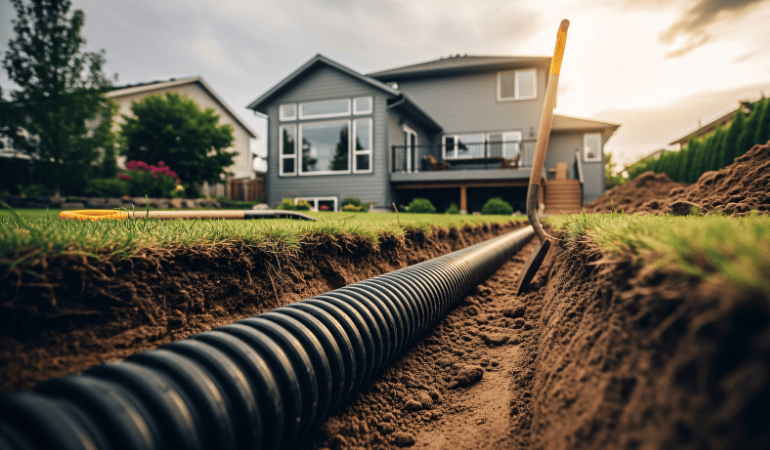
Spring drainage problems rarely show up all at once. They start subtly. A small puddle that lingers longer than it should. Soil that feels overly soft in certain areas. Water collecting along the edge of a patio or near a foundation. As snow melts and the ground thaws, these warning signs become easier to see — and easier to correct if caught early.
In communities like Waukee, West Des Moines, Clive, and Urbandale, late winter and early spring create ideal conditions for drainage issues to surface. Addressing them now prevents erosion, lawn damage, and foundation concerns later in the season when heavier rains arrive.
Why Spring Reveals Hidden Drainage Issues
During winter, frozen ground masks grading problems. Snow covers uneven surfaces, and ice temporarily fills low spots. Once temperatures rise and moisture begins to move through the soil again, water follows the natural slope of your property.
If grading is slightly off or soil has shifted over time, spring meltwater will highlight it quickly.
Common early signs of spring drainage problems include:
• Water pooling in the same area repeatedly
• Soggy turf long after surrounding soil dries
• Mulch washing out of beds
• Small channels forming in soil
• Ice forming repeatedly in one spot before thaw
These signs should not be ignored. What appears minor in early spring often worsens once steady rain begins.
The Connection Between Soil Compaction and Drainage
Soil compaction is one of the most overlooked causes of spring drainage problems. Over the course of a year, foot traffic, snow accumulation, and even lawn equipment compress soil layers.
Compacted soil reduces:
• Water absorption
• Root oxygen access
• Drainage speed
• Turf health
When water cannot infiltrate properly, it moves across the surface instead, leading to pooling and erosion.
In many Central Iowa neighborhoods, newer developments may also experience settling, which subtly changes grading patterns over time.
How Hardscapes Contribute to Water Movement
Patios, driveways, and walkways are designed to shed water. However, if they settle unevenly or were installed without proper slope, they can redirect water toward unintended areas.
Look closely at:
• Water collecting along patio edges
• Downspouts discharging too close to hard surfaces
• Runoff flowing toward foundations
• Paver edges separating from surrounding soil
Spring drainage problems often stem from small hardscape shifts that alter how water flows.
Downspouts and Gutters Are Often the Culprit
Downspouts play a larger role in drainage than most homeowners realize. If they discharge too close to the foundation or landscape beds, water concentration increases dramatically.
Common issues include:
• Short downspout extensions
• Splash blocks positioned poorly
• Runoff saturating planting beds
• Erosion near corners of the home
Redirecting runoff even a few feet can significantly reduce spring drainage problems.
Why Low Spots Get Worse Over Time
A slight depression in your lawn may not seem urgent, but repeated pooling accelerates soil movement. Each time water collects, it softens the area further, allowing more soil displacement.
Over time, this leads to:
• Thinning turf
• Persistent mud patches
• Increased mosquito activity
• Larger grading corrections
Addressing low spots early prevents long-term instability.
Foundation Protection Starts With Grading
Proper grading should direct water away from your home. Even minor slope changes near the foundation can create moisture retention against the structure.
Spring drainage problems near the foundation may show up as:
• Water lingering along the perimeter
• Soil pulling away after saturation
• Basement moisture concerns
Early correction through minor regrading or improved runoff management protects the structure long-term.
Drainage and Irrigation Must Work Together
Drainage and irrigation are closely connected. Once irrigation systems are activated, pre-existing grading issues can worsen if not addressed.
Before irrigation startup, it is important to evaluate:
• Areas where meltwater pooled
• Soil absorption rates
• Zones with uneven turf response
If drainage problems are present, irrigation adjustments alone will not fix them.
Signs You Should Not Ignore
Some spring drainage problems are cosmetic. Others indicate structural grading issues that require attention.
Call for evaluation if you notice:
• Water touching your foundation repeatedly
• Erosion forming visible channels
• Hardscape settling
• Persistent standing water after 24 hours
• Washed-out mulch following mild rain
Early action reduces the scope and cost of correction.
Solutions That Prevent Escalation
Not every drainage issue requires major construction. Many can be corrected through strategic adjustments.
Potential solutions include:
• Minor regrading
• Swale creation to redirect water
• Downspout extensions
• Soil amendment to improve absorption
• Hardscape slope corrections
The right approach depends on how water is currently moving across your property.
Why Timing Matters
Addressing drainage in early spring is significantly easier than mid-season repairs. Once turf is actively growing and landscaping is fully established, corrective work becomes more disruptive.
Early-season corrections allow:
• Clean grading adjustments
• Minimal turf disturbance
• Better integration with landscaping plans
• Prevention of erosion before heavy rain
This is the ideal window to act.
Preventing Long Term Damage
Spring drainage problems are rarely isolated. If ignored, they often contribute to lawn decline, plant stress, and ongoing erosion.
Correcting water flow early protects:
• Turf density
• Plant root systems
• Hardscape stability
• Foundation integrity
Water should move intentionally, not randomly.
A Proactive Approach to Property Protection
Spotting drainage problems early puts you ahead of seasonal weather patterns. Rather than reacting after heavy rains create visible damage, proactive correction keeps your landscape stable and functional.
If you are noticing pooling water, erosion, or grading changes as snow melts, contact Escape Landscaping at 515-250-9886 or info@escapelandscaping.net, or submit a request through our website. We help homeowners throughout Waukee, West Des Moines, Clive, and Urbandale correct drainage issues before they turn into larger structural or landscaping problems.